Thursday, October 11, 2007

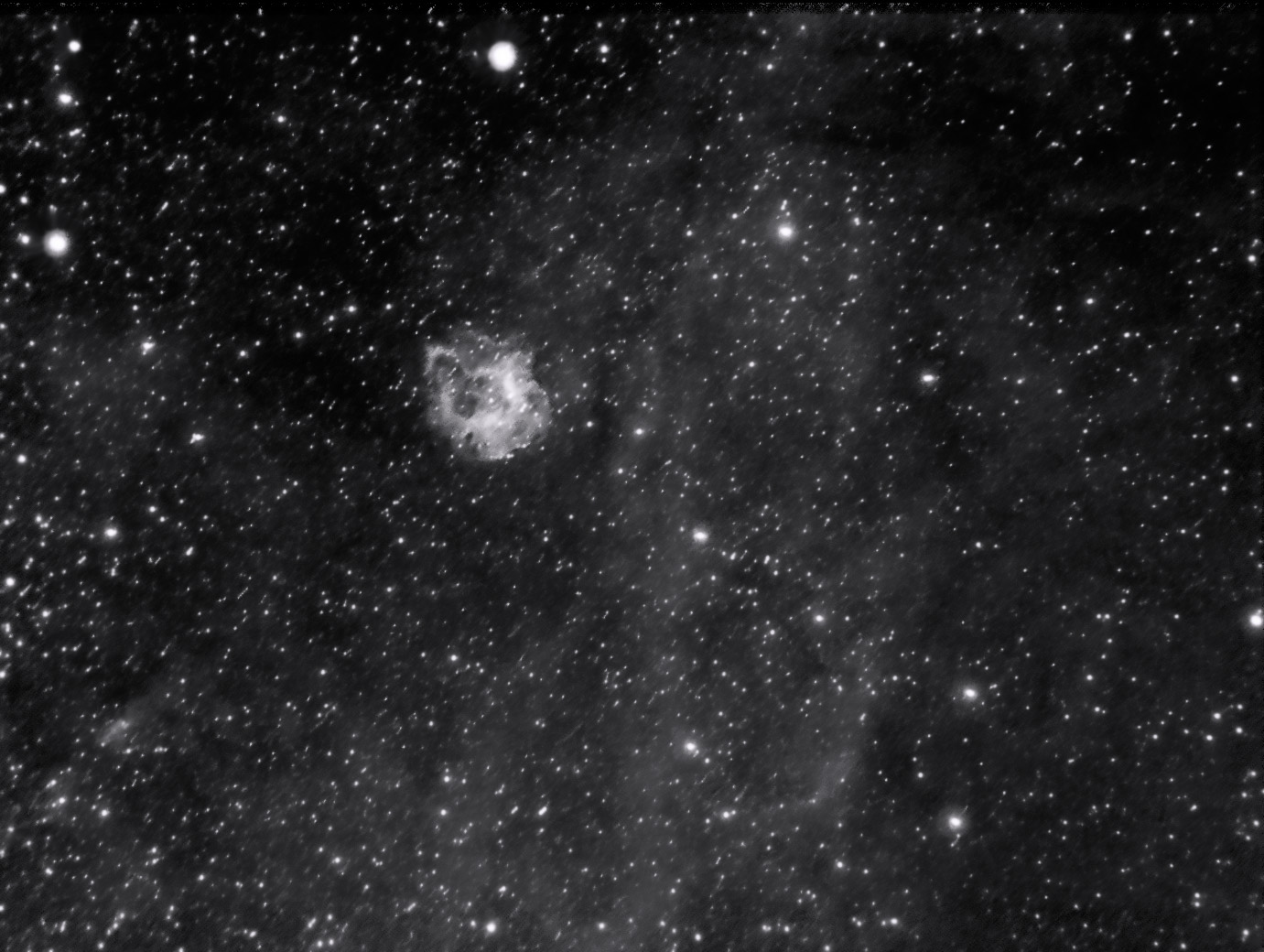
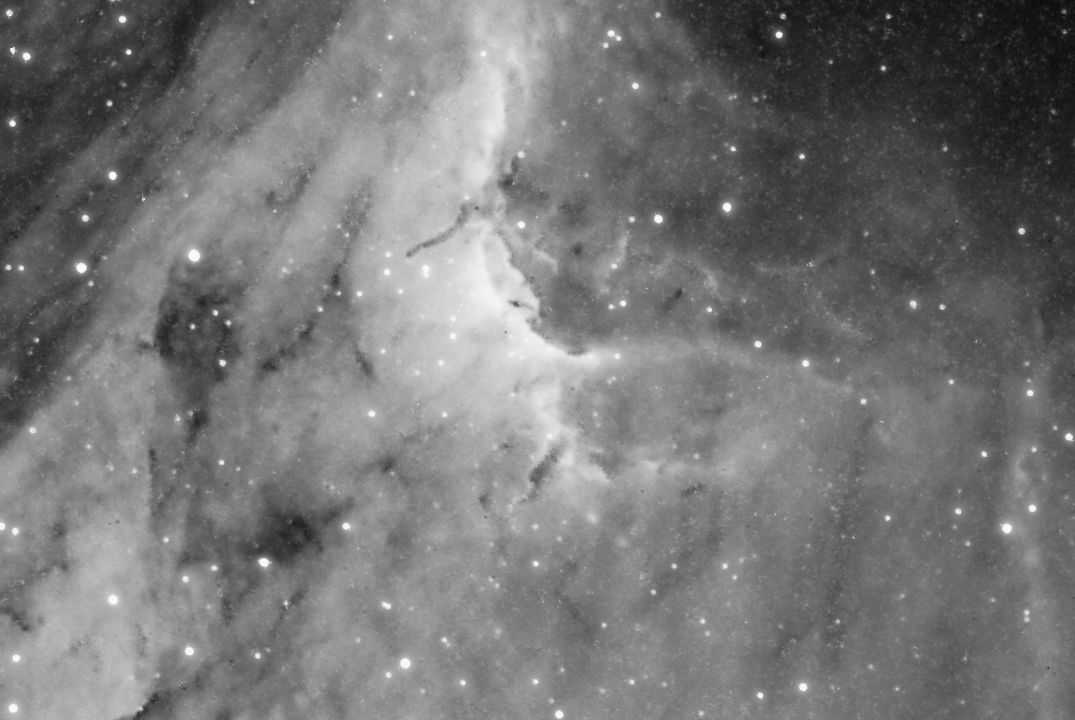
IC5070 Pelican Nebula

click here
©2007 Richard Murray

Full Size Image

Notes: This was a short exposure run just to test out the GRAS3 scope in New Mexico (1 of 6 scopes available for rental at that location).

The good news is the Tak 150 has about the same field of view as my 80mm Megrez APO which means I can combine images taken at my home observatory with those taken with the Tak in New Mexixo. :>))

Imaging Details:

Date: 10-8-07
Object: IC5070 Pelican Nebula
Telescope: Takahashi TOA 150
Mount: Paramount ME
Camera: SBIG ST-10 XME ABG
Filter: Astrodon Ha
Exposure: Ha - 30 min [10 min subs]
Processing: CCDStack, Photoshop CS2, PixInsight
Location: GRAS Observatory, Mayhill, NM
Friday, October 05, 2007

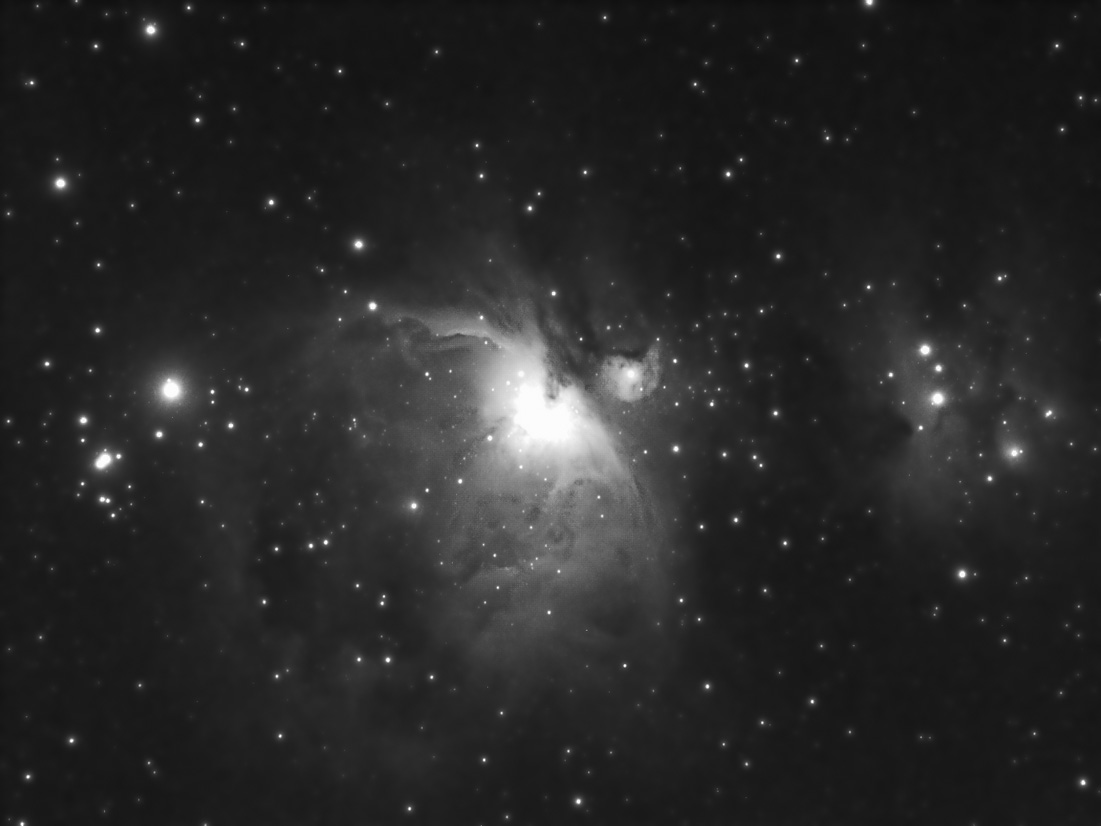
Orion and Running Man Nebula - M42 & NGC1977

click here
©2007 Richard Murray

Full Size Image

Techno Stuff: 10/6/07 Camera: SBIG STL-11000M , Imaging Scope:TAK FSQ-106 ED, One 60 sec exposure with a clear filter, Autoguided, Processed with CCDStack, Photoshop CS2, PixInsight

Notes: I'd like to say I went out and bought a bunch of new insanely expensive equipment but I didn't. This is my first image taken using equipment that is part of the Gobal-Rent-A-Scope stable of fine instruments which are located throughout the world.

This image was taken by me over the internet with a robotically controled scope located in the central part of South Australia on 10/6/07 at 3:30am Ausie time. Here in the US at my location it was in the early afternoon.

Keep in mind this is not a stack of exposures. It is just one 60 sec exposure through a clear filter when the moon was at 33% illumination. Not bad at all for such a short time.

The Beginning Of My New Observatory

The hole is dug for the pier.


©2007 Richard Murray

The base for the pier is complete.


©2007 Richard Murray

Notes: Construction should begin on 10-11-07 and be completed within two or three days. The observatory is going to be a 10' by 14' with a 5' by 10' warm room. More images to come . . .

Thursday, September 27, 2007

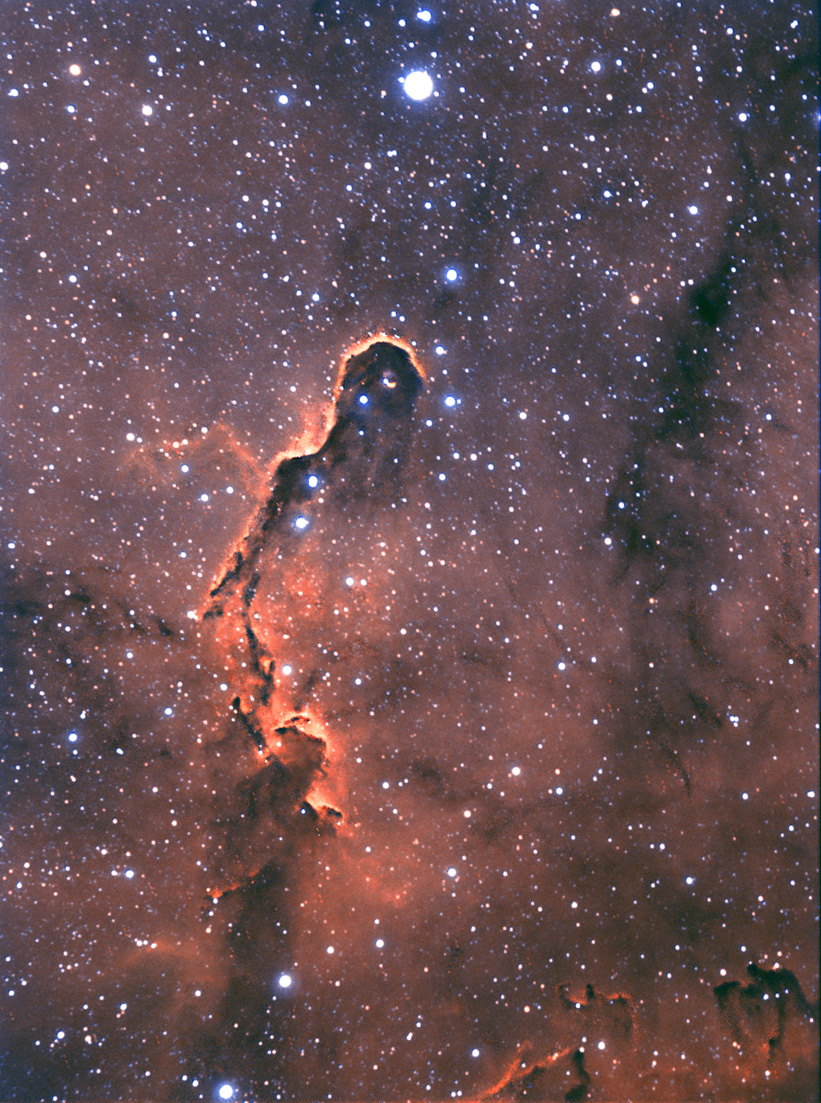
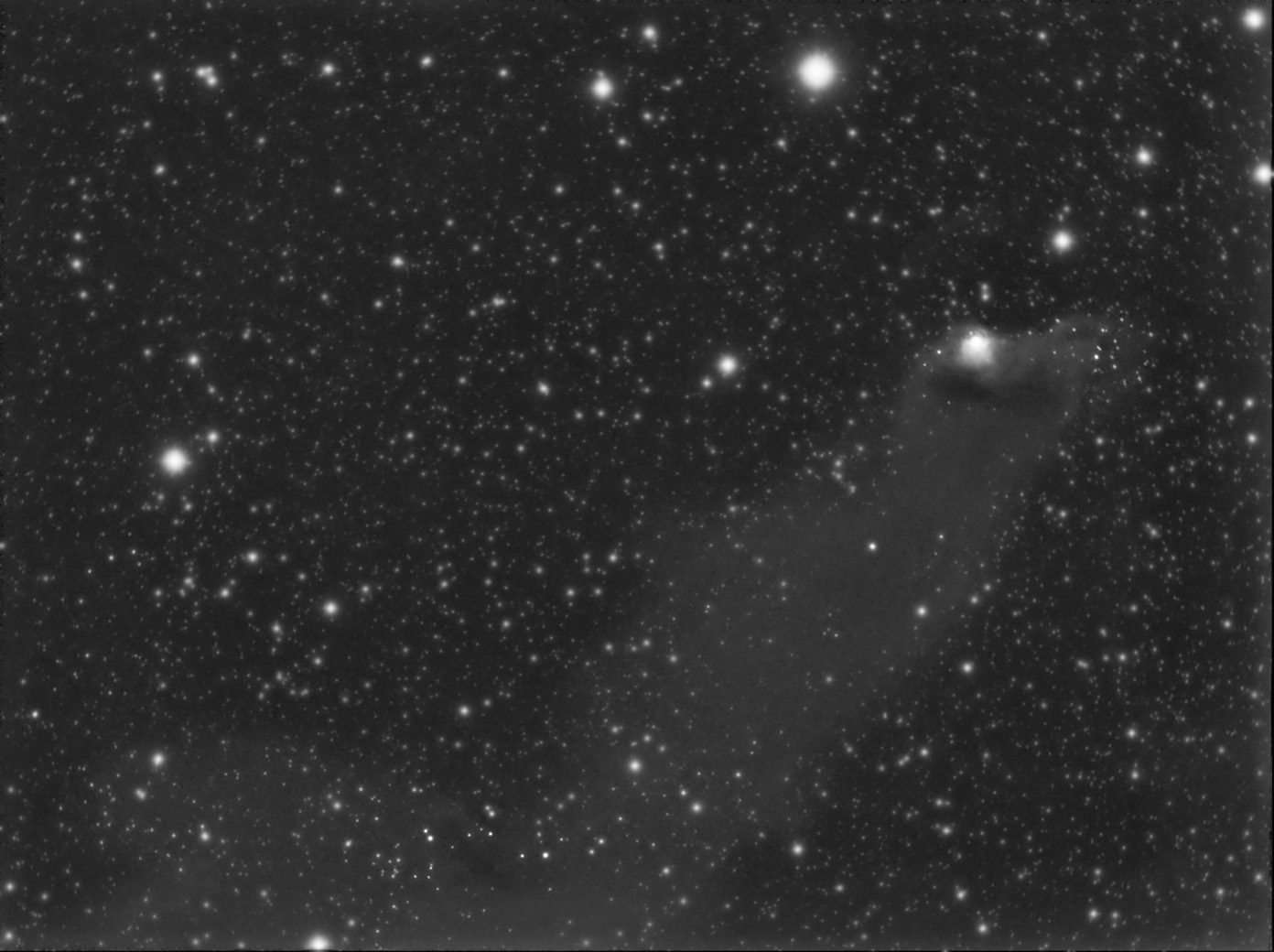
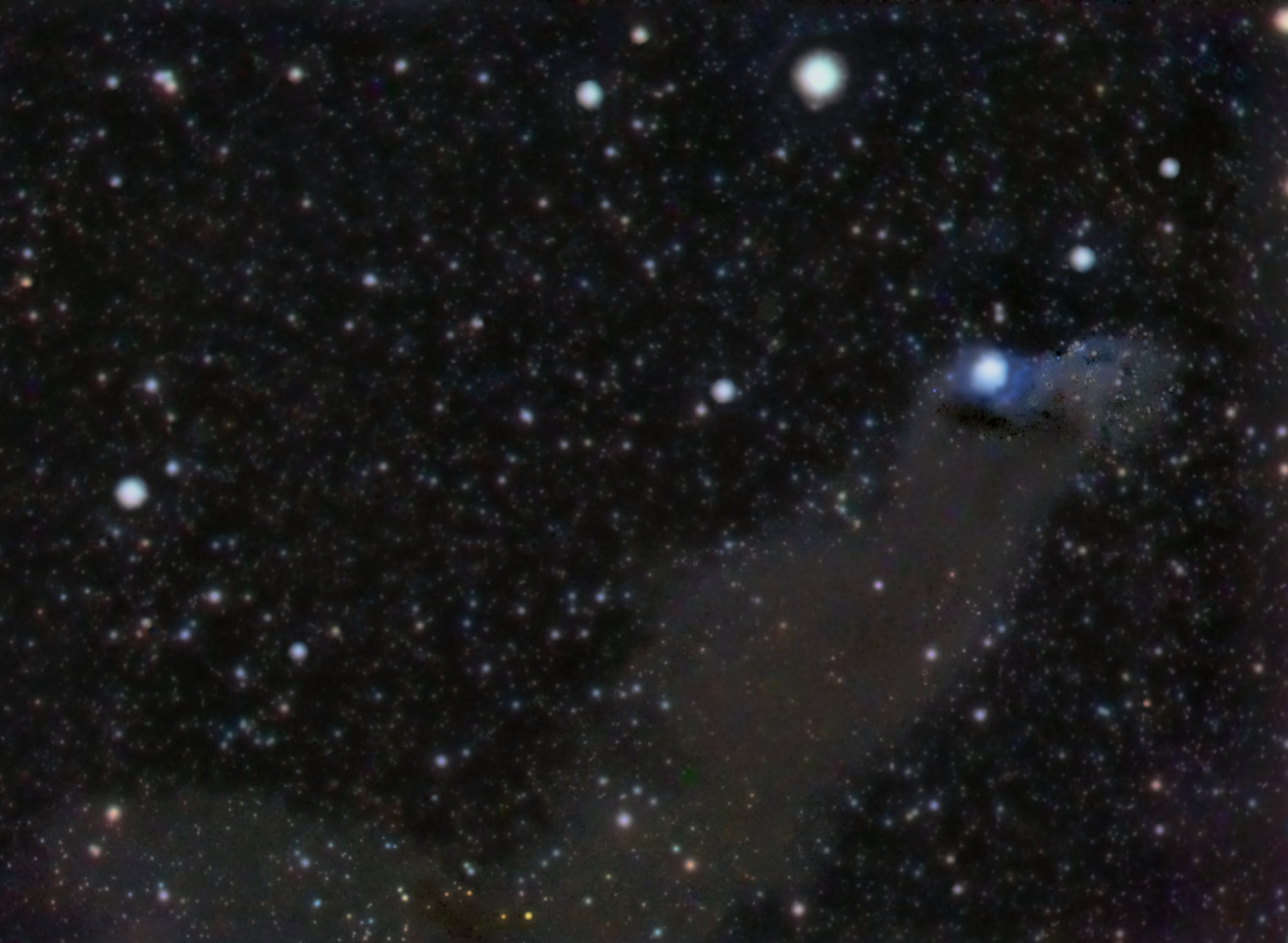
VdB142 "Elephant Trunk" in Ha:sG:OIII

click here
©2007 Richard Murray

Full Size Image

Techno Stuff: 6/20/07 Camera: ATK-16hr, Imaging Scope: Megrez 80mm APO at F/6, mounted on LX90 8" SCT, Ha 6nm 80 min total with 20 min subs, OIII 14nm 90 min total with 30 min subs, no binning, Darks Applied, Autoguided with QGuide and PHDGuide from LX90, , Processed with CCDStack, Photoshop CS2, PixInsight

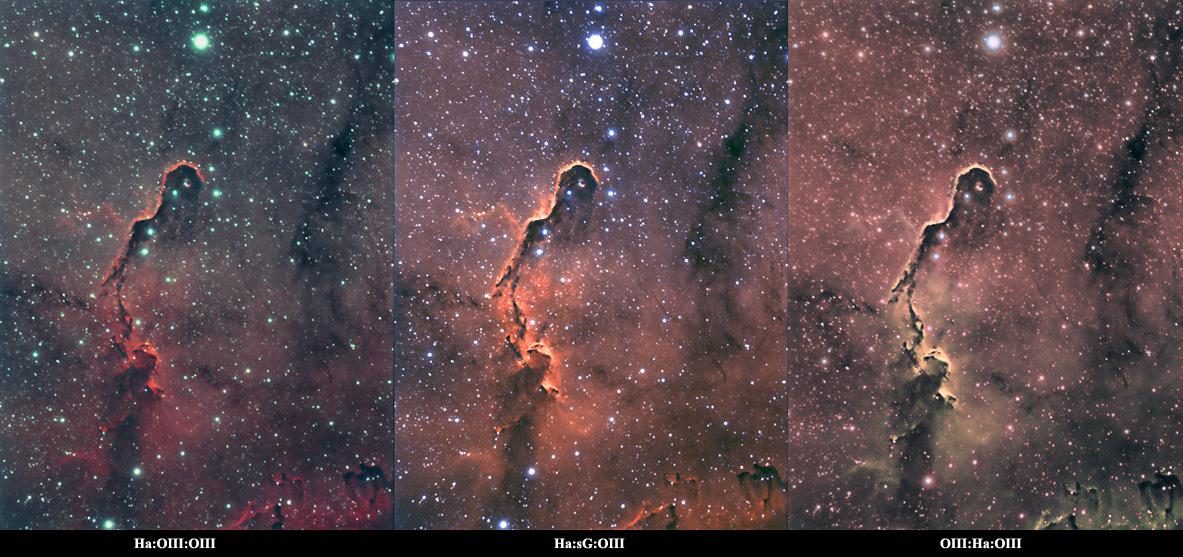
Notes: This is an Ha:sG:OIII narrowband image with Ha mapped as red, OIII as blue and a synthetic green generated from the Ha and OIII images. I took this back on June 20th but didn't have a chance to process it until now.

I didn't plan on the colors turning out this way but I think the black and orange are appropriate with Halloween just around the corner. :>))

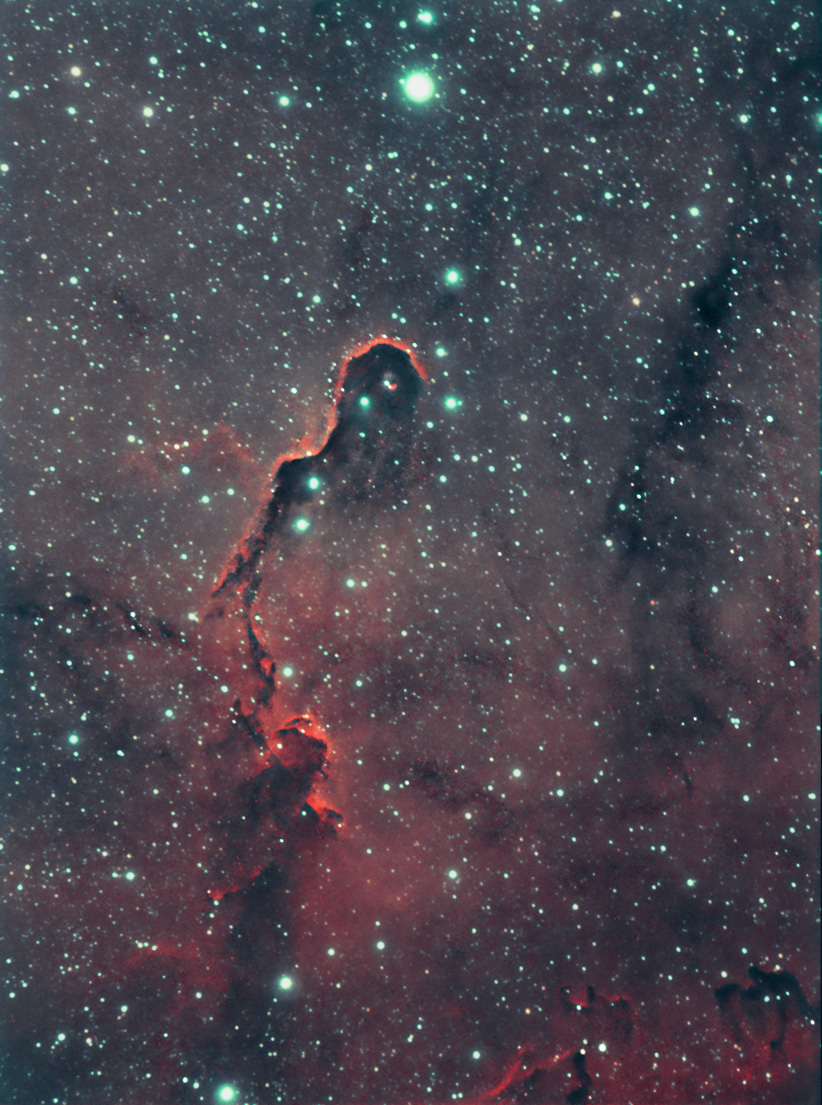
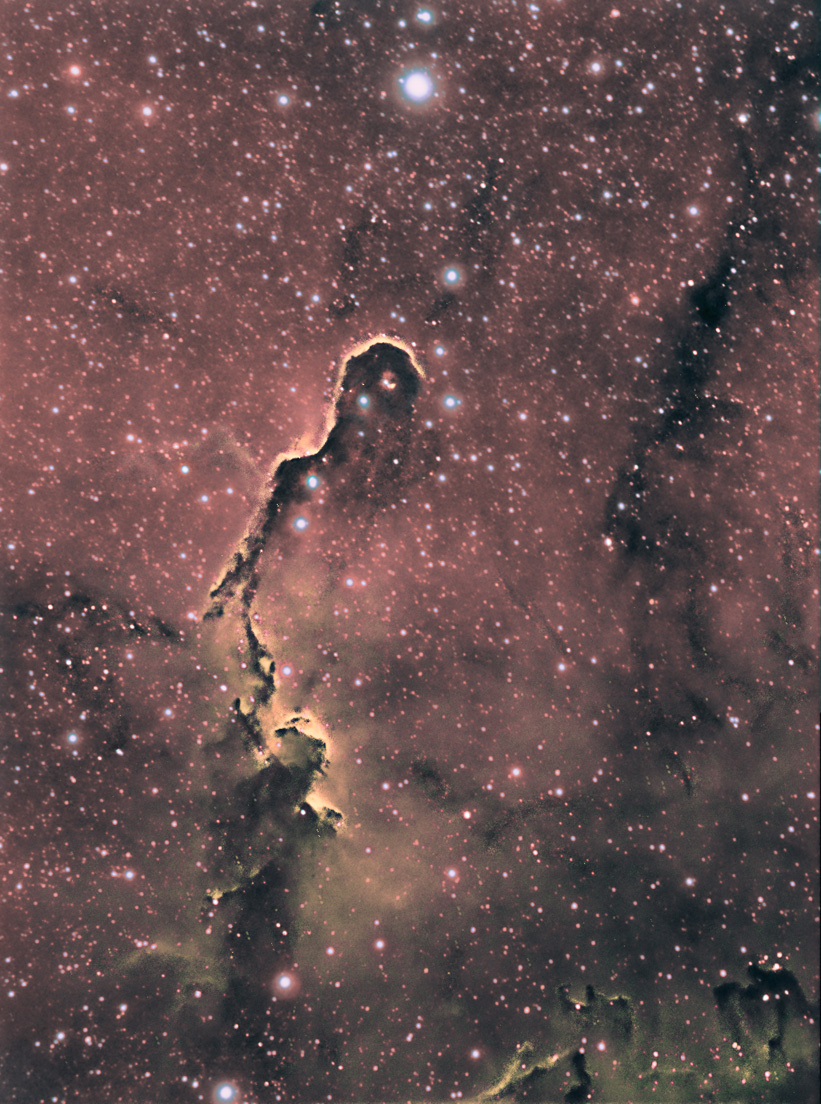
In the two images below the colors are remapped to red:green:blue respectively.

Here's an Ha:OIII:OIII version.

click here
©2007 Richard Murray

Full Size Image

And here's an OIII:Ha:OIII version.

click here
©2007 Richard Murray

Full Size Image

And here is a collage of all three.

Monday, September 17, 2007

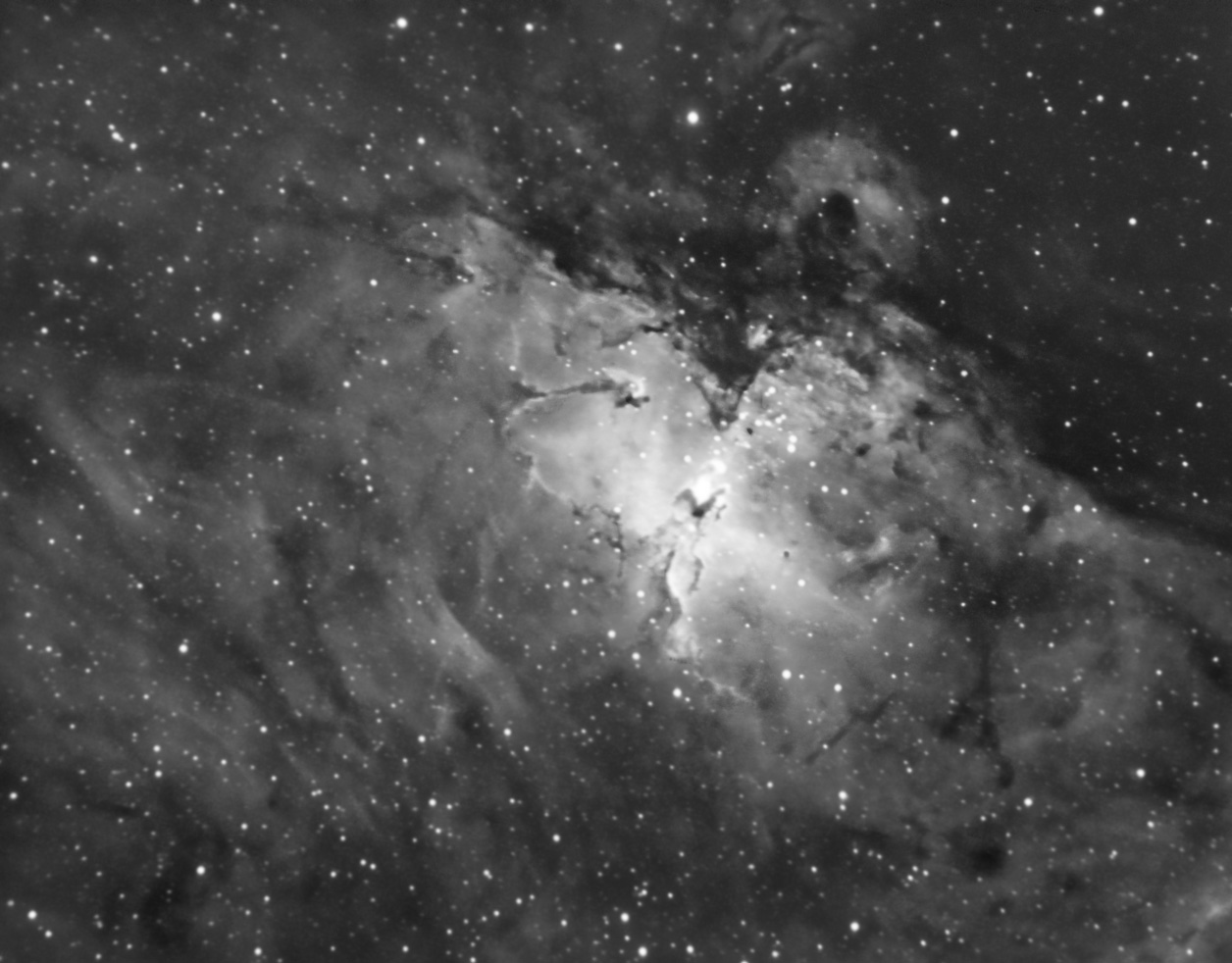
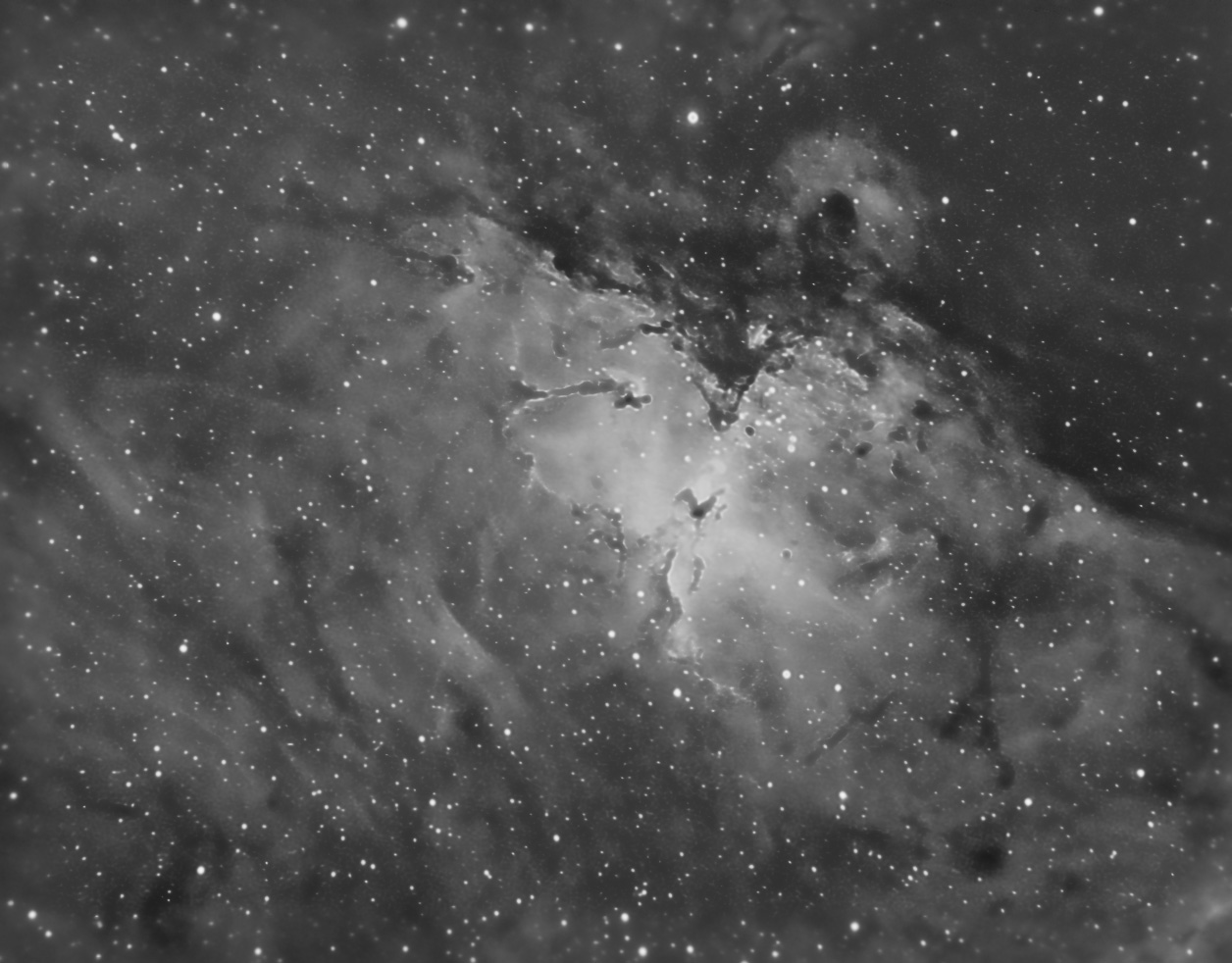
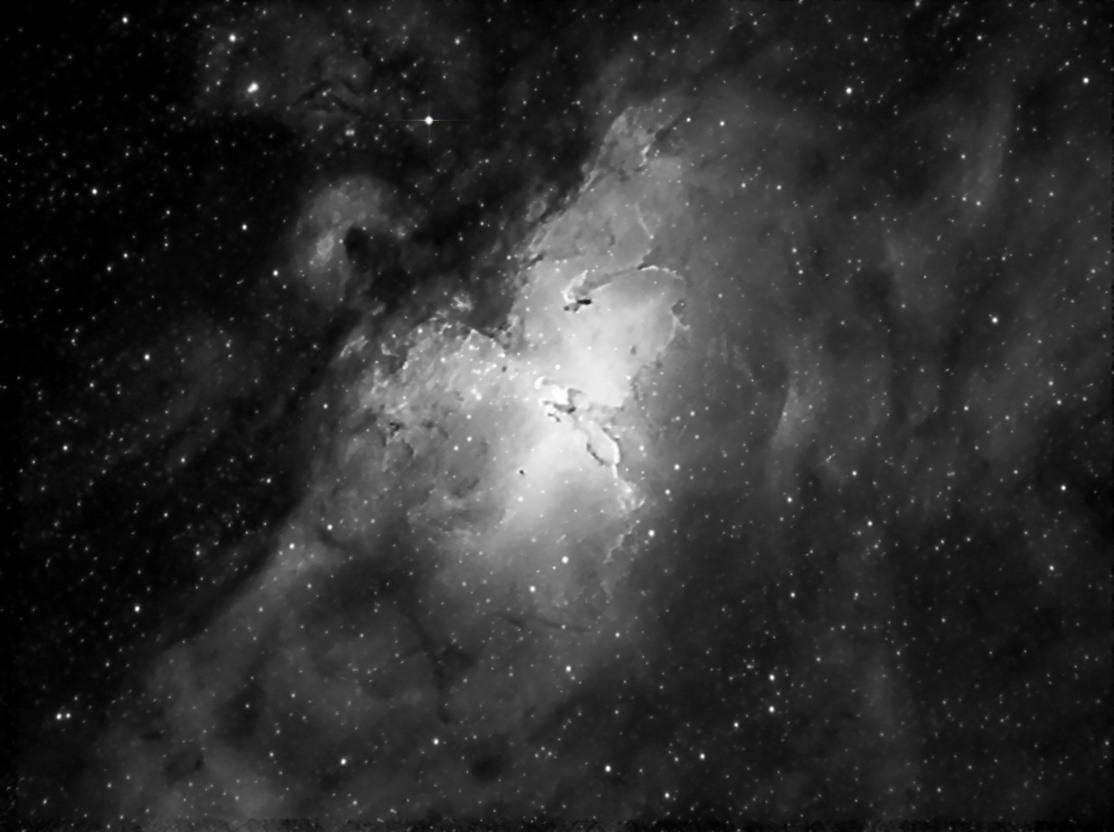
M16 Eagle Nebula in Halpha

click here
©2007 Richard Murray

Full Size Image

This version has had deconvolution and DDP (digital development process) applied.

click here
©2007 Richard Murray

Full Size Image

Techno Stuff: 7/8/07 Camera: ATK-16hr, Imaging Scope: Megrez 80mm APO at F/6, mounted on LX90 8" SCT, Ha 160 min total with 20 min subs, no binning, Darks Applied, Autoguided with DSI Pro and PHDGuide from LX90, , Processed with CCDStack, Photoshop CS2, PixInsight

Notes: This is my second attempt at M16 with double the amount of Halpha exposure and better tracking overall. Lots more detail is apparent. My old image is here for comparison.

The Eagle Nebula is where the famous Hubble telescope 'pillars of creation' image was taken and are located towards the center of the image.

Thursday, September 13, 2007

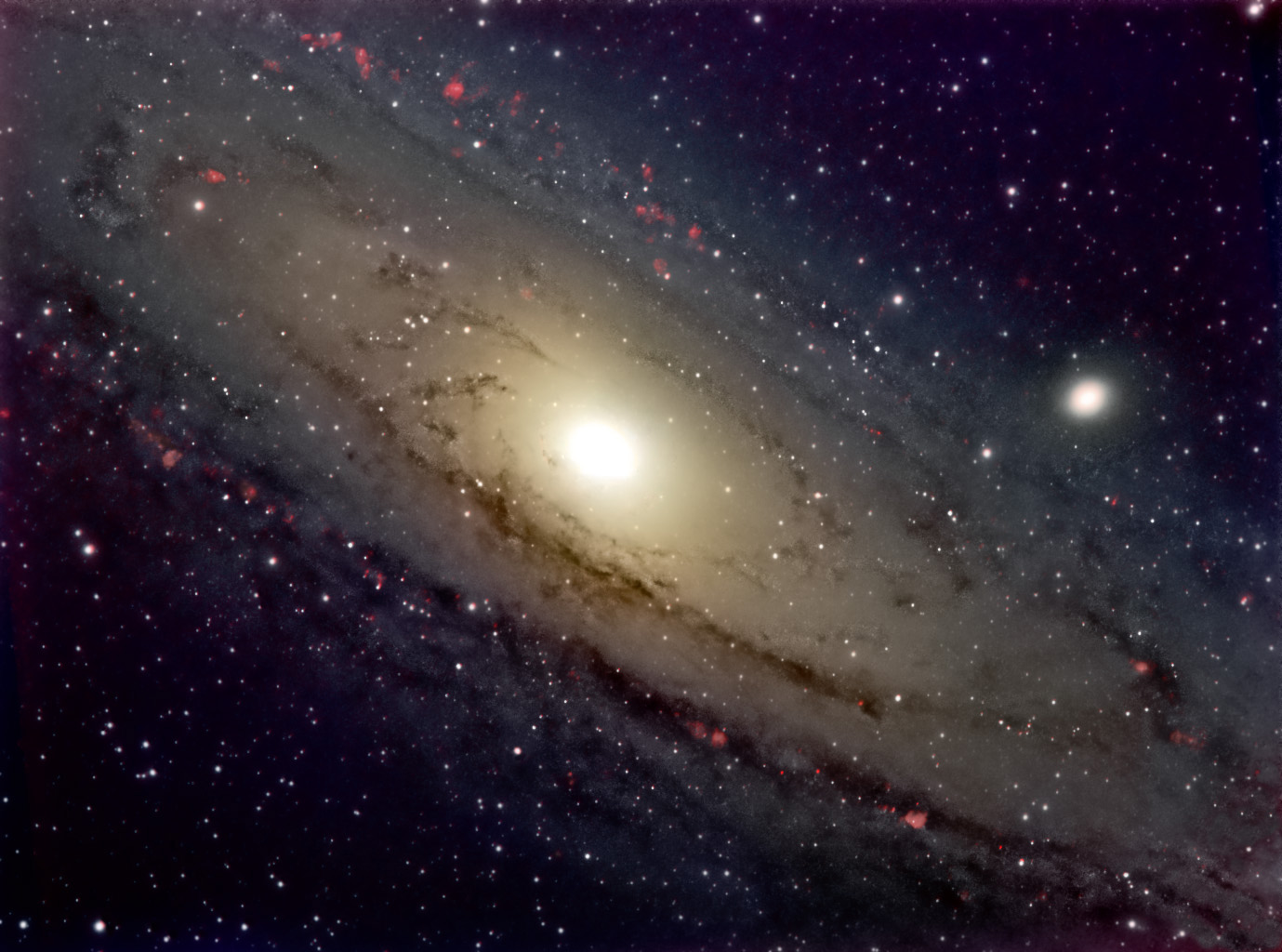
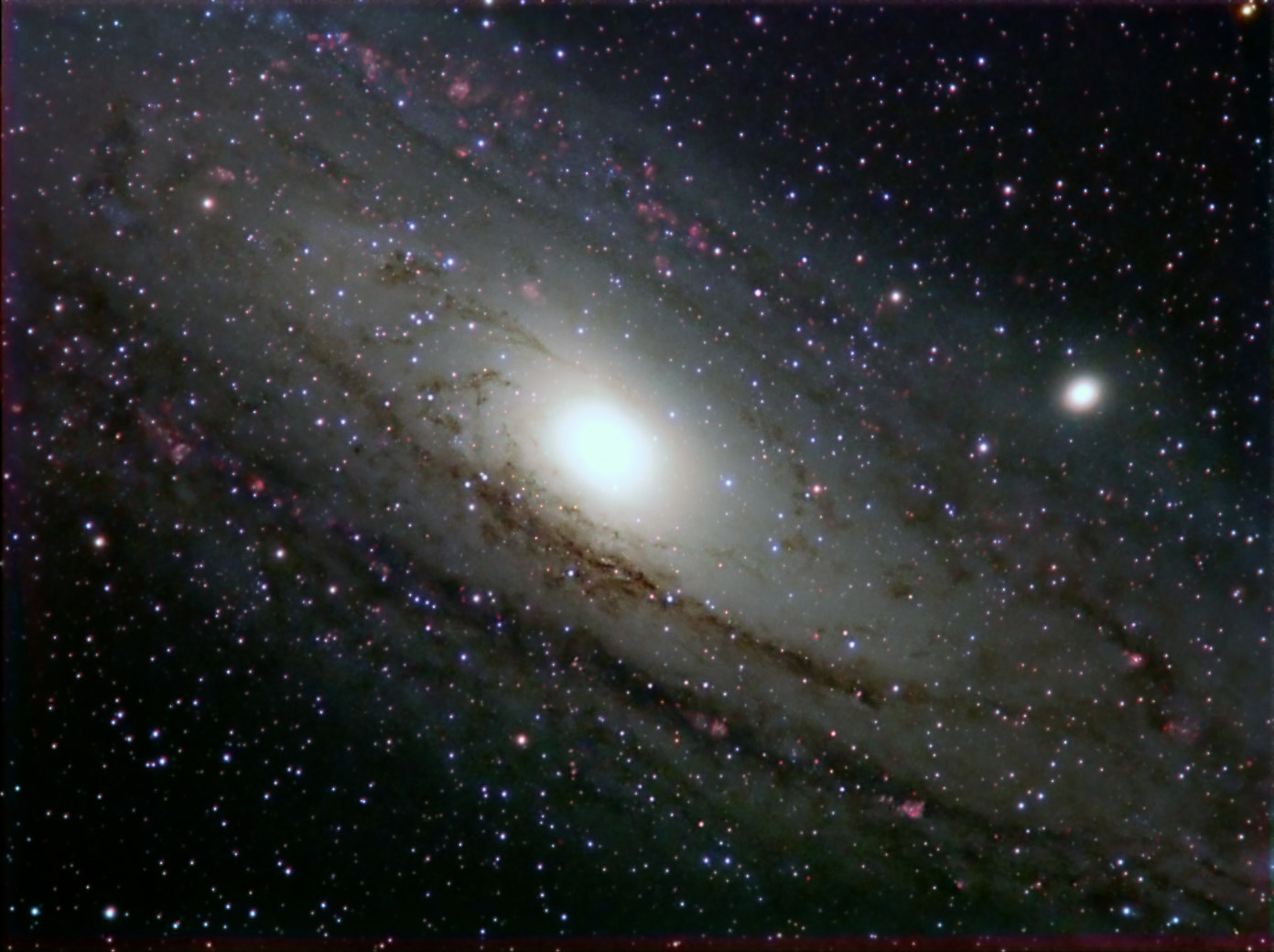
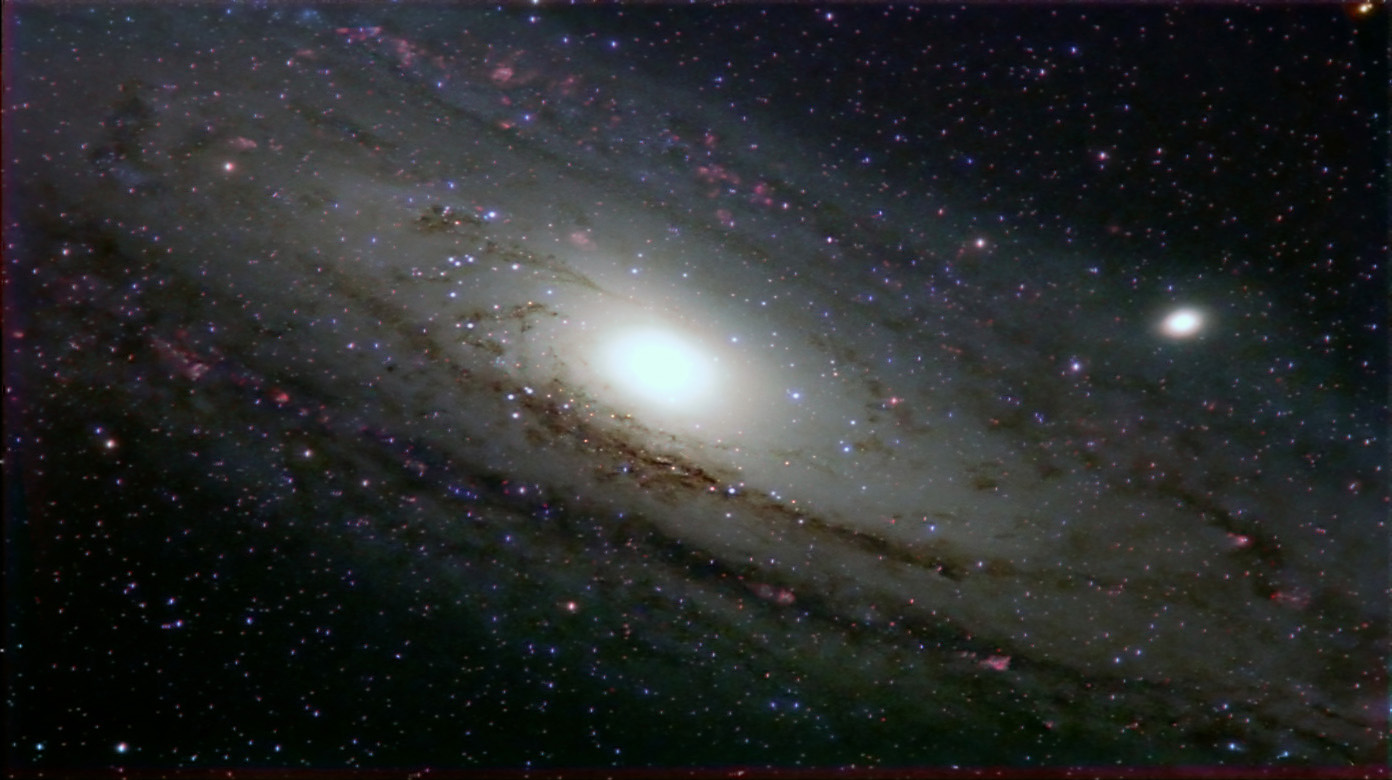
M31 Andromeda Galaxy Ha-LLRGB

Here's a reprocessed image with a little more natural color.

click here
©2007 Richard Murray

click here
©2007 Richard Murray

Full Size Image

Wide Screen Monitor View

Techno Stuff: 7/28/07 Camera: ATK-16hr, Imaging Scope: Megrez 80mm APO at F/6, mounted on LX90 8" SCT, IR 40 min total with 8 min subs, no binning, Red & Green 20 min total with 5 min subs, Blue 24 min total with 6 min subs, Binning 2X2, 7/29/07 Ha 160 min total with 20 min subs, No binning,Autoguided with DSI Pro and PHDGuide from LX90, No Darks, Processed with CCDStack, Photoshop CS2

Notes: This is a Ha-LLRGB image which shows the red H-alpha regions surrounding M31. Lots of processing on this image as integrating Ha data with LLRGB is more complicated than I thought. Just for fun, I've also included a widescreen version for those with widescreen monitors.

Tuesday, September 11, 2007

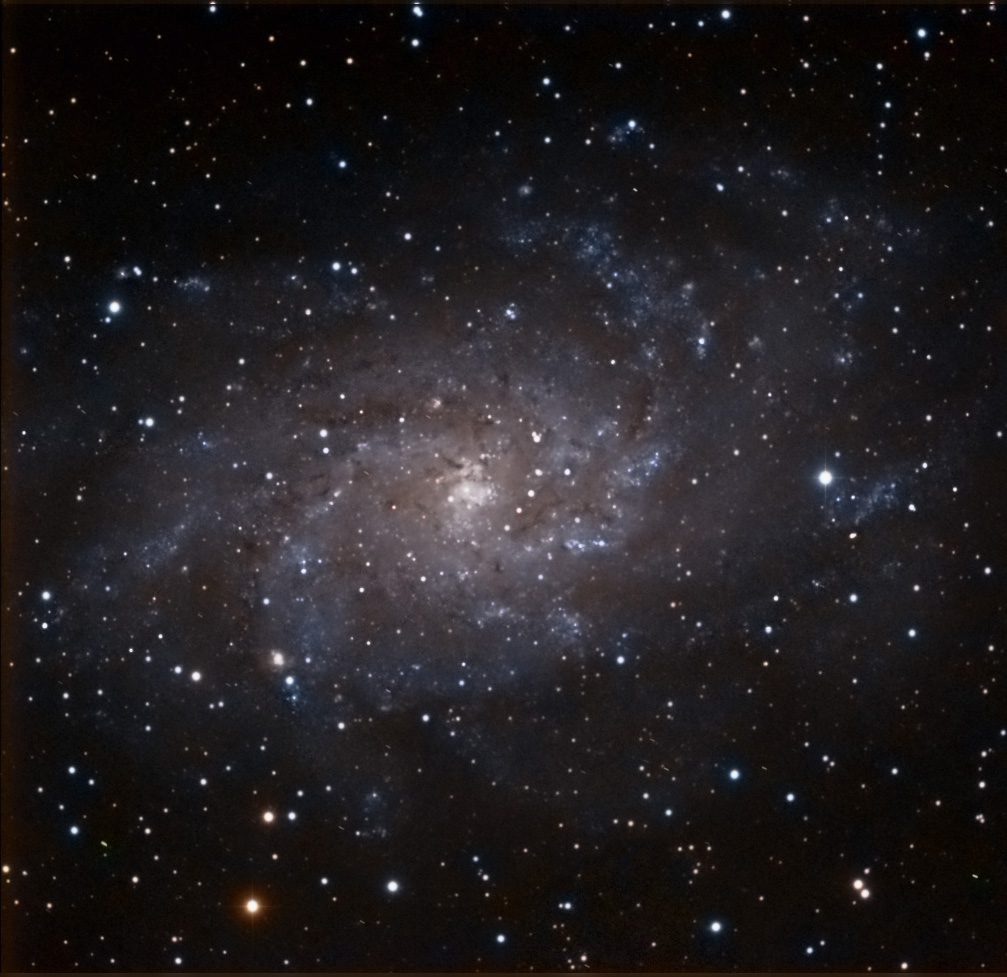
M33 Pinwhell Galaxy

click here
©2007 Richard Murray

Full Size Image

Techno Stuff: 9/10/07 Camera: ATK-16hr, Imaging Scope: Megrez 80mm APO at F/6, mounted on LX90 8" SCT, IR 65 min total with 5 min subs, no binning, Red 25 min with 5 min subs, Blue 30 min with 6 min subs, Binning 2X2, Synthetic Green channel, Autoguided with Q-Guide and PHDGuide from LX90, No Darks, Processed with CCDStack, Photoshop CS2 and PixInsight

Notes: This is an LLRGB image using a synthetic green channel. It was taken under murky conditions with high altitude clouds forcing me to keep the exposure time down. The RGB color required a heavy saturation boost plus LLRGB layering in order to realize much color at all.

Saturday, September 01, 2007

Sh2-104 Emission Nebula in Cygnus

click here
©2007 Richard Murray

Full Size Image

Techno Stuff: 8/18/07 Camera: ATK-16hr, Imaging Scope: Megrez 80mm APO at F/6, mounted on LX90 8" SCT, Ha 6nm, 76 minutes total with two 30 min subs and one 16 min sub (interupted due to clouds), binning 1x1, Autoguided with DSI Pro and PHDGuide from LX90, No Darks, Processed with CCDStack, Photoshop CS2 and PixInsight

Notes: Seldom imaged by amateur astronomers, this is a very faint emission nebula in the constellation Cygnus. This is located due east of the popular Crescent Nebula. Sh-104 is viewed by professional astronomers as a good illustration of the "collect and collapse" model of star formation triggered by the rapid expansion of a Helium II region.

Tuesday, August 28, 2007

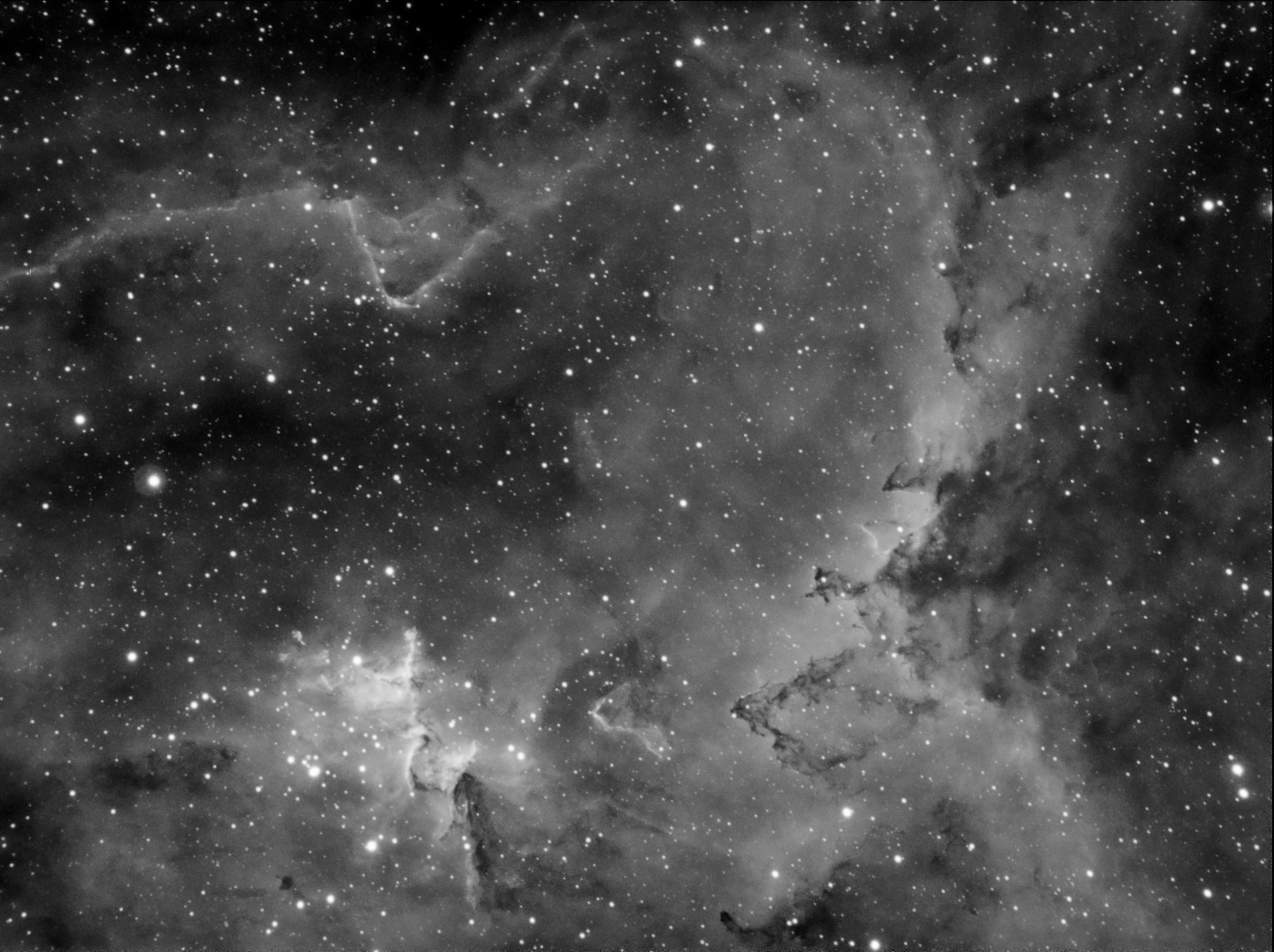
IC1805 Heart Nebula

click here
©2007 Richard Murray

Full Size Image

Techno Stuff: 8/26/07 Camera: ATK-16hr, Imaging Scope: Megrez 80mm APO at F/6, mounted on LX90 8" SCT, Ha 6nm 140 minutes total with 20 min subs binning 1x1, Autoguided with Q-Guide and PHDGuide from LX90, No Darks, Processed with CCDStack and Photoshop CS2 and PixInsight

Notes: I tried to keep the amount of processing down on this one because the stacked image looked so good. This was taken on a clear calm night just after about 2 weeks of rain.

Thursday, August 16, 2007

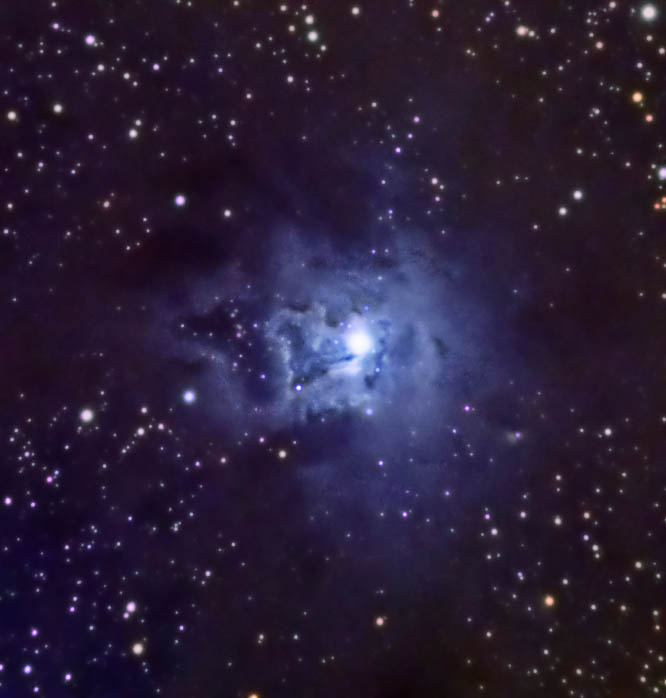
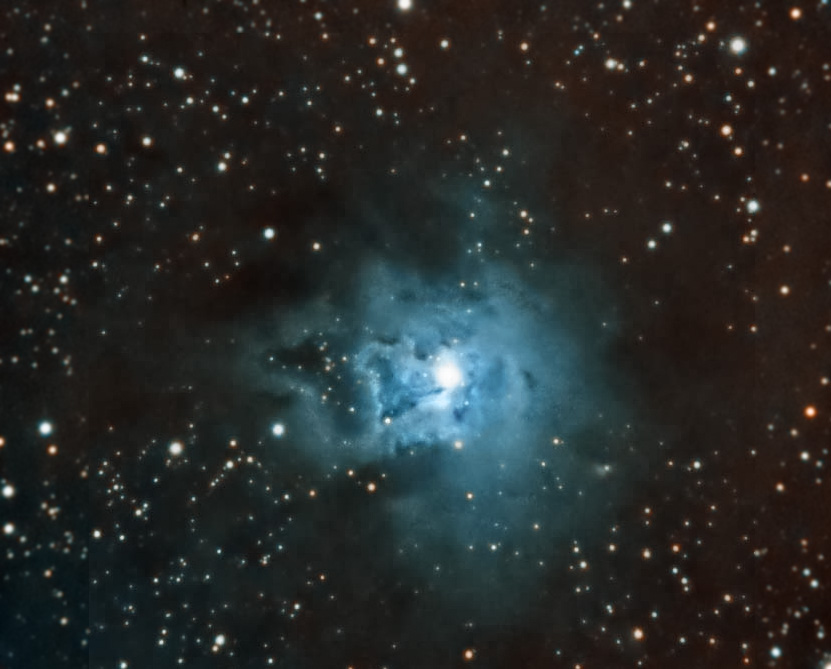
NGC7023 Iris Nebula LRGB

click here
©2007 Richard Murray

Full Size Image

click here
©2007 Richard Murray

Full Size Image

Techno Stuff: 5/18/07 for Luminance and RG and 8/11/07 for B, Camera: ATK-16hr, Imaging Scope: Megrez 80mm APO at F/6, mounted on LX90 8" SCT, Luminance IR 11 minutes total with 1 min subs and 80 minutes total with 5 minute subs binning 1x1, Red and Green 20 minutes with 5 minute subs binning 2x2, Blue 30 minutes with 6 min subs binning 2x2, Autoguided with DSI Pro and PHDGuide from LX90, Darks Applied Luminance Only, Processed with CCDStack, Photoshop CS2 and PixInsight.

Notes: I imaged the luminance, red and green frames in May but it took me until August to get some decent blue frames. The full size image is small because the blue frames had to be rotated almost 45 degrees to match up with the earlier images. But it all turned out ok in the end.

The second image is the same as the first but processed by combining the red and blue frame with a synthetic green frame along with the original luminance frame. Once this was processed in Photoshop, the top image was desaturated (color removed) and this was placed on top as another luminance frame to create what is called an LLRGB image.

Tuesday, August 07, 2007

VDB 152 Reflection Nebula in Cepheus

click here
©2007 Richard Murray

Full Size Image

And here is the LRGB Color image of the same object.

click here
©2007 Richard Murray

Full Size Image

Techno Stuff: 7/21/07 for Luminance and 7/22 for RGB, Camera: ATK-16hr, Imaging Scope: Megrez 80mm APO at F/6, mounted on LX90 8" SCT, Luminance IR 60 minutes total with 10 min subs binning 1x1, Red and Green 25 minutes with 5 minute subs, Blue 30 minutes with 6 min subs binning 2x2, Autoguided with ATK-2hs and Guidedog from LX90, Darks Applied Luminance Only, Processed with CCDStack and Photoshop CS2

Notes: The color image had to be cropped due to rotation of the RGB images which were taken on the following night. This was much easier to process in grayscale than in color. The color image took two separate processing attempts and I settled on the second try.

Sunday, July 29, 2007

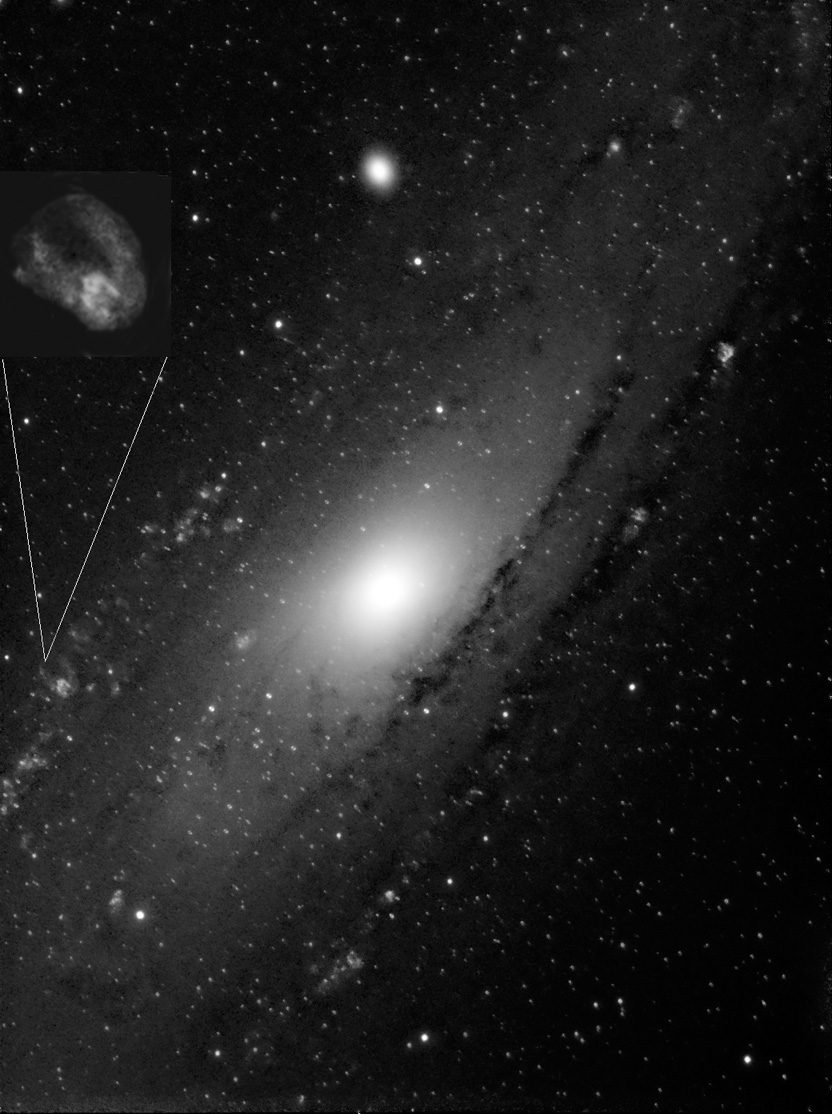
Emission Nebula in M31 Andromeda Galaxy

click here
©2007 Richard Murray

Full Size Image

Techno Stuff: 7/29/07 ATK-16hr, Megrez 80mm APO at F/6, mounted on LX90 8" SCT, Halpha 6nm 160 minutes total with 20 min subs no binning, Autoguided with Atk-2hs and Guidedog from LX90, No Darks, Processed with CCDStack Photoshop CS2 PixInsight

Notes: Just as most emission nebula in the Milky way emit prodigious amounts of energy in the Halpha range, there is no reason why emisson nebula in the Andromeda Galaxy shouldn't as well. So I spent the night imaging M31 using an Halpha filter to see if I could find a few. And there they are, sprinkled throughout the sprial arms.

The one which I've highlighted is a dead ringer for NGC2359 Thor's Helmet. Imagine an alien amatuer astronomer imaging such a giant emission nebula as this! (I sure would like to know what kind of astronomy equipment he, she, it is using) :>))

Sunday, July 22, 2007

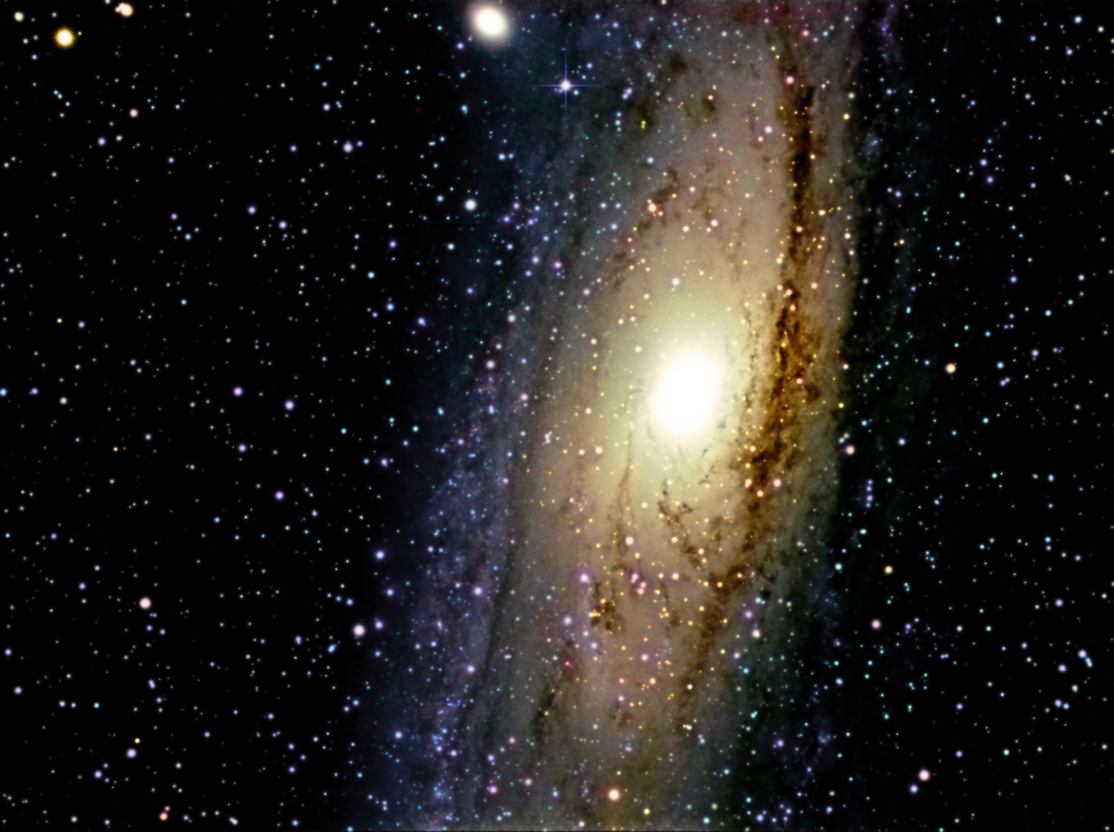
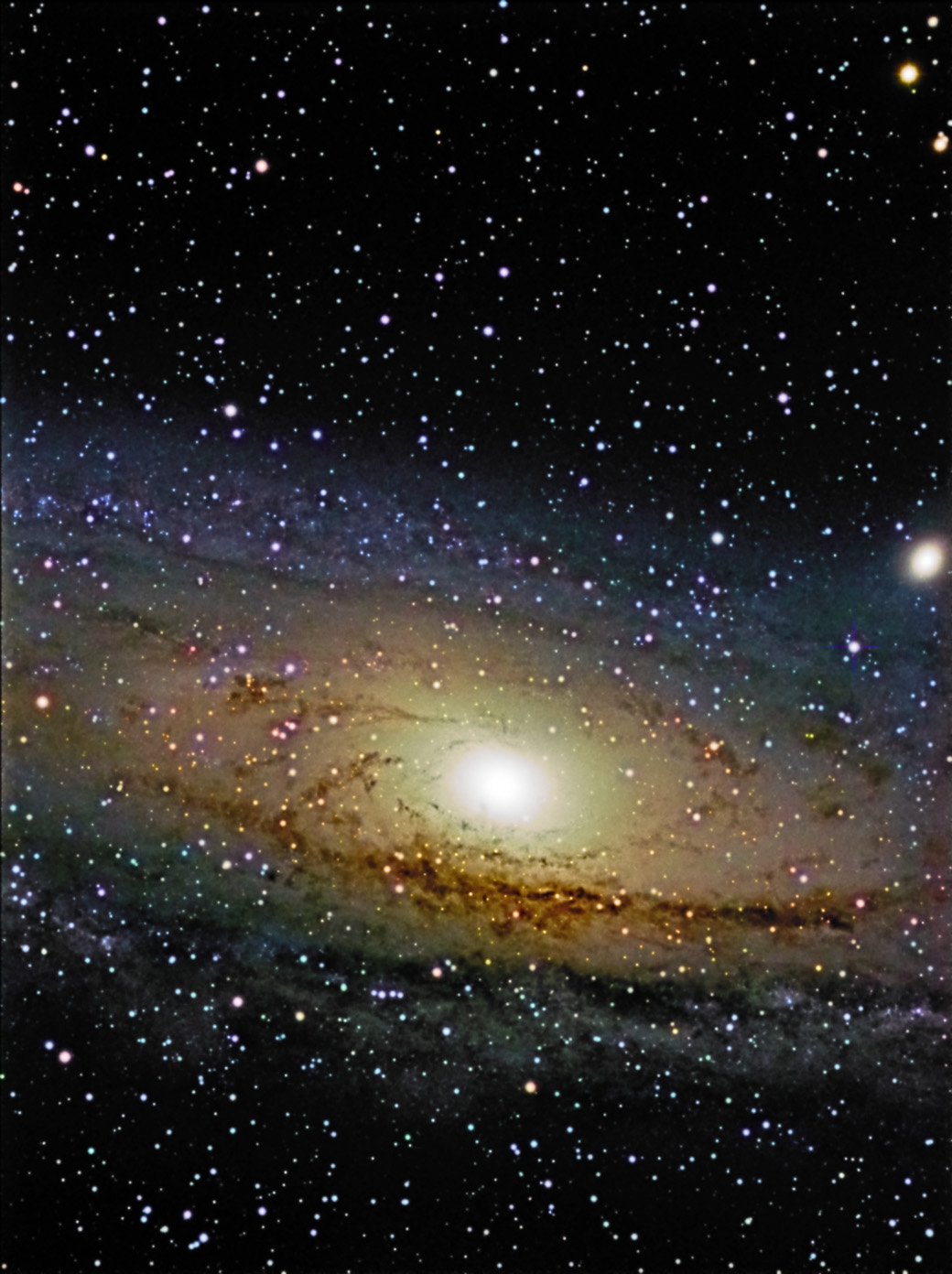
M31 Andromeda Galaxy

click here
©2007 Richard Murray

Full Size Image


Below is a softer processed version which doesn't burn out the galaxy core so much and brings out more of the outer arms. This was blended with the above image in Photoshop. Click on the image for a full size view.

click here
©2007 Richard Murray

Techno Stuff: 7/22/07 ATK-16hr, Megrez 80mm APO at F/6, mounted on LX90 8" SCT, Luminance IR 30 minutes total with 6 min subs binning 1x1, Red and Green 15 minutes with 5 minute subs, Blue 18 minutes with 6 min subs binning 2x2, Autoguided with Q-Guide and PHDGuide from LX90, No Darks, Processed with CCDStack and Photoshop CS2

Notes: Let's just say this was a real adventure in color processing. I can't recall imaging an object that had this many colors pop out at once during processing. But that's part of the fun of doing what I do.

Looks like there is a very clear light bridge from M31 to it's captured satellite galaxy M32.

This image was taken on a very special night. Even though several neighbors had there porch lights on, the night was crystal clear with the milkyway in full view.

Thursday, July 19, 2007

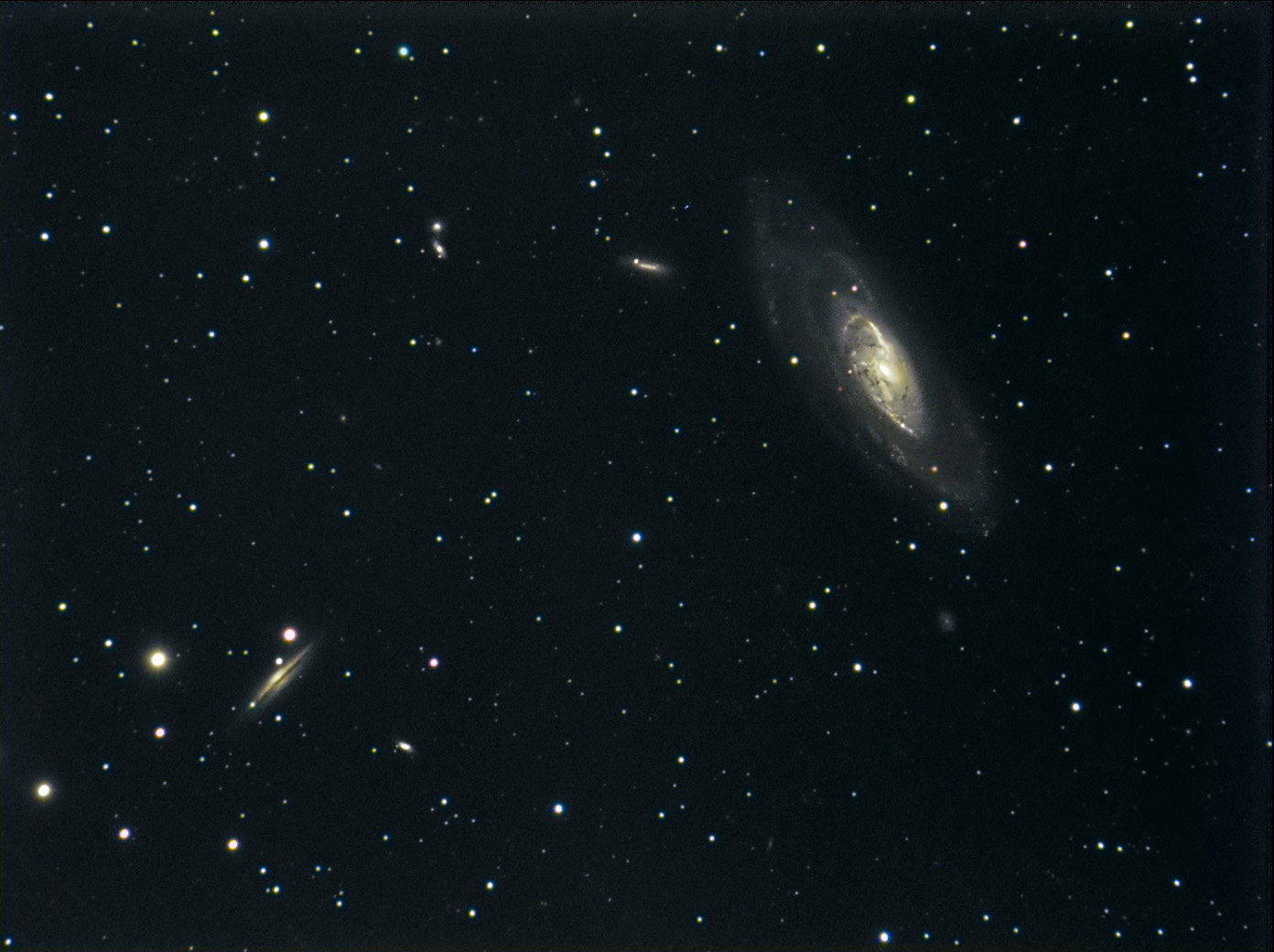
M106 and Friends LRGB

click here
©2007 Richard Murray

Full Size Image

Techno Stuff: 6/8/07 ATK-16hr, Megrez 80mm APO at F/6, mounted on LX90 8" SCT, Luminance IR 80 minutes total with 8 min subs, binning 1x1, Red 20 minutes with 5 minute subs - Blue 30 minutes with 6 minute subs Binning 2x2, Synthetic Green, Autoguided with Atk-2HS and Guidedog from LX90, Darks Applied, CCDStack, Photoshop CS2, PixInsight

Notes: To get all the details of M106's core please look at the full size image. I did the best I could on the color. I started out with the whole thing looking yellowish green so I switched to Lab Color in Photoshop and the color processing went a lot smoother.

The large galaxy is M106 and the edge on smaller galaxy right next to it on the left is NGC4248. The two galaxies next to that are NGC4231 and NGC4232. There appears to be a faint light bridge between them so they may be interacting. The larger edge on galaxy at bottom right is NGC4217 and to the right of it is NGC4226. I'm pretty sure the faint galaxy just below M106 is UGC7356.